Since we've touched on the subject, let's talk about smooth and Latin jazz. Smooth Jazz - Smooth jazz began in the 1970s but really took off during the 80s. It's style evolved from fusion but instead of energetic solos, smooth jazz emphasizes a more polished sound. It was heavily influenced by R&B, funk, rock, and pop music genres. The smooth jazz movement took these styles and added it's modern, electronic personality to the music. Instruments that became widely associated with smooth jazz are the soprano saxophone, legato electric guitar, and electric keyboards.
What's unique about smooth jazz is that it's sound is far removed from the classic improvisation. Instead, smooth jazz consists of high tech layering of synthesizers and rhythm tracks, which puts more emphasis on the ensemble rather than the expression (improvisation does just the opposite). Unfortunately, this electronic sound separates smooth jazz from all other "live" performances, which proposes the argument of whether or not the term jazz truly applies.
Latin jazz - Also known as Afro-Cuban jazz, Latin jazz is a fusion of North, South, and Central American sounds using jazz improvisation and highly infectious rhythms. It's Bebop roots are apparent among some of its highly complicated and energized compositions. Original traces of Latin jazz can be attributed to trumpeter-arranger Mario Bauza and percussionist Chano Pozo in the mid 1940s.
Latin jazz consists of a straight rhythm rather than a swung rhythm (something that traditional jazz generally has). This style also uses a form of a clave (a five stroke rhythmic pattern used for temporal organization in Afro-Cuban music) instead of a backbeat. The conga, timbale, guiro, and claves (all percussion instruments) are some of the usual instruments used to give the music a Latin sound. Other predominant instruments in Latin jazz are the trumpet, saxophone, and trombone.
This is a continuation of my Gato Barbieri post. However, the goal of this video is to show how a song can have a different sound when given a different emphasis (and instrument).
Obviously, Santana puts his own unique spin to a classic latin and smooth jazz favorite. Listen to how the structure of Europa remains the same; yet is different between Barbieri and Santana. Both are beautiful. Both are full of passion. I'm not too crazy about latin or smooth jazz, but this song always helps me to understand and appreciate the unique sound and quality talent that emerges from these two styles of jazz. Europa is always a favorite! Enjoy! :D
Talk about a sound that's both sensual and captivating! Argentine tenor saxophonist and composer, Leandro Barbieri, better known as Gato Barbieri, plays some of the smoothest saxophone you'll ever hear. Born to a family of musicians, Barbieri began playing after hearing Charlie Parker's "Now is the Time." He began his career playing the clarinet and alto saxophone. By the early 1960s, Barbieri was playing tenor saxophone and let the influences of John Coltrane's late recordings, as well as other free jazz saxophonists such as Albert Ayler and Pharoah Sanders, shape his unique sound. It was then a that Barbieri developed that warm, "gritty" tone, which would become Barbieri's trademark.
By the late 1960s, Barbieri was fusing sounds of South American music into his recordings and introduced a whole new world of passionate music. He won a Grammy for his score for Bernardo Bertolucci's film Last Tango in Paris, which led to a record deal with Impulse Records. He's worked with some of music's most recognizable artists such as Carlos Santana, and jazz music giants like Don Cherry and Charlie Haden. Gato Barbieri's smooth, sexy, passionate latin sound has truly made him a jazz icon among the free, latin, and smooth jazz communities.
Here are two of my favorite Gato Barbieri's songs:
She is Michelle - A song Gato Barbieri wrote for his wife Michelle some years after her tragic death. A personal favorite since my name is Michelle :D
To help 88.1FM KKJZ kick off Jazz Appreciation Month, let's take a look at one of jazz's greatest figures, Duke Ellington.
Duke Ellington was best known for leading his orchestra and composing music specifically for the style and skills of the members in his orchestra. "Jeep's Blues" was composed for Johnny Hodges, "Concerto for Cootie" for Cootie Williams, which later became "Do Nothing Till You Hear From Me" with Bob Russell's lyrics, and "The Mooche" for Tricky Sam Nanton and Bubber Miley. Because of Ellington's compositions, many of the orchestra members remained with the orchestra for several decades.
Here is a sample of Ellington's song "The Mooche", again composed to showcase Tricky Sam Nanton on flute and Bubber Miley, jazz trumpeter and cornet player (specializing in using the plunger mute):
"The Mooche" was a great example of how Ellington composed his music to showcase the members of his orchestra. It's no wonder as to why Duke Ellington was hailed as one of the greatest figures in jazz music history. Here's another cover of "The Mooch" by the Royal Crown Revue. Enjoy! :D
If you're looking for a jazz radio station, look no further! Cal State University Long Beach broadcasts one of the best jazz stations in southern California on 88.1 FM KKJZ. KKJZ has been broadcasting since 1981. It's funded by contributions from listener members and other donors, with about 75% of its funding coming from station memberships. KKJZ offers memberships to their listeners which gives insight on local jazz events, discounts at various local businesses and concerts, chances to win tickets, CDs, exclusive invitations to meet jazz artists, and much more.
KKJZ features a jazz musician and their music in their weekly "Jazz Master of the Week." Here listeners can learn all about the featured musician's music, life, and possible upcoming shows. DJs are quite insightful and have a true passion for jazz and blues music. During the broadcasts, listeners can call in and make pledges that help fund the station. Many promotional offers are available for donations as well.
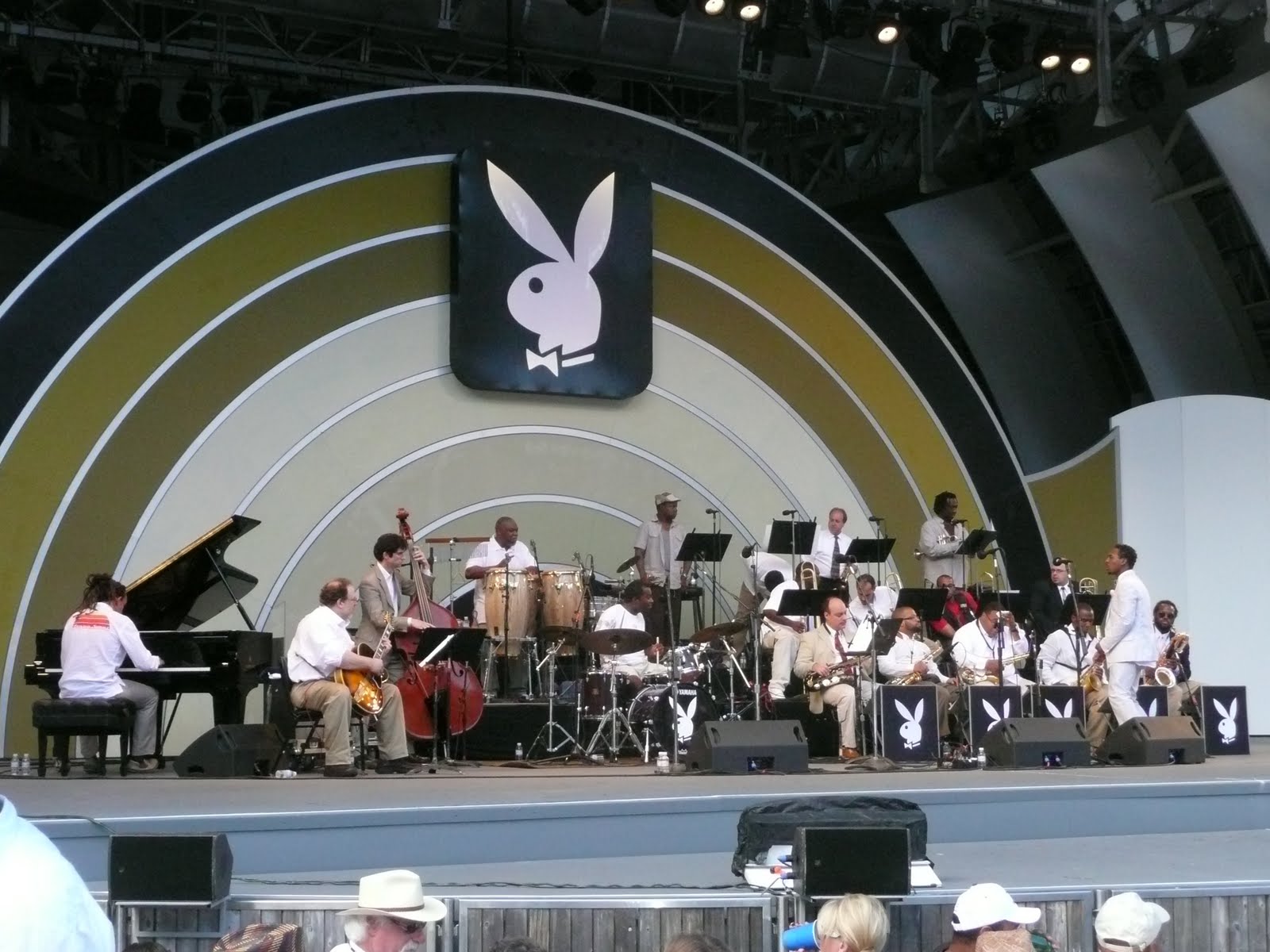
If you're looking for any upcoming jazz shows, KKJZ has great information on upcoming events and jazz festivals. Traditionally, KKJZ has broadcast at the Long Beach Jazz & Blues Festival, as well as the Playboy Jazz Festival. They also highlight smaller festivities such as the Hollywood & Highland Summer Jazz Concert Series, a great summer event for food, wine, and great music!
Make sure to check out their website for updated shows, artist information, and anything about jazz. April is Jazz Appreciation Month. Make sure to contact the station with your comments and questions about jazz, and your emails could be read on air! Once you discover 88.1 FM, KKJZ, you'll be hooked. It's easily my favorite jazz station. Check out the link below to visit their website.
A jazz music staple, George Gershwin's Summertime from the 1935 opera Porgy and Bess is one of the most remade songs in music history. There are over 2600 known covers with new renditions being recorded each year. It's believed that Gershwin tried to base Summertime on a Ukrainian lullaby, Oi Khodyt Son Kolo Vikon (A Dream Passes By The Windows). In 1933, He composed to include his own spiritual sound in the style of African American folk music of that period.
Here's a perfect example of how a new sound can totally change a song. This version is done by Kenny Sara and the Sounds of New Orleans. In this song, the saxophone is the highlighted instrument, which gives the tune a smooth sound. This version is definitely my favorite, but that's mainly because I am so in love with the sound of the saxophone. Enjoy! :D
Ok, I know I'm way late on the subject, but I figured I had to give these ladies some love. March is the month for women's appreciation, and what better way to appreciate the females than through their beautiful music. As you all know, jazz music has had an array of amazing female innovators, voices, songs, stories, and legacies. Here are just some of those fabulous voices:
Billie Holiday (1915-1959)
Billie Holiday began singing for tips in various Harlem night clubs during the early 1930s. A penniless Holiday moved an audience to tears when she sang "Body and Soul" in a local club. In 1933, she was discovered by John Hammond, who arranged for her debut recording with Benny Goodman that same year. Two years later, Holiday once again recorded with Goodman along with a group led by pianist Teddy Wilson in which they recorded "What A Little Moonlight Can Do" and "Miss Brown To You." These tunes helped launch Billie Holiday as a major female vocalist, and she began recording under her own name in 1936. One her most famous songs, "Strange Fruit", a song based on a poem about lynching, was highly controversial for its time. Unfortunately, Holiday felt that the song's message had been misconstrued; saying that people would always ask her to sing that sexy song about people swinging. "Strange Fruit" still remains one of her most notable tunes. Other Holiday songs: "Your Mother Son In Law," "Riffin' the Scotch," "What A Night, What A Moon, What A Girl," "Fine and Mellow," "God Bless This Child," and "Lady Sings the Blues"
Ella Fitzgerald (1917-1996) Ella Fitzgerald was one of those stellar finds. She loved the works of Louis Armstrong, Bing Crosby, and The Boswell Sisters. Her career began after winning a contest at the Apollo and joining Chick Webb's band. Fitzgerald had several hits with Webb's Orchestra including "Love and Kisses" and "If You Can Sing It, You'll Have To Swing It." But in 1938, she became widely known across the music scene after the recording of "A-Tisket, A-Tasket." From there, Fitzgerald started performing solo and then became big during the big band and swing eras. But probably the one thing most notable thing about Ella Fitzgerald was her invention of scat singing. She developed this style of singing while working with Dizzy Gillespie's band, and she had said that she tried to do with her voice what she heard the horns in the band doing. Little did she know, this improvised way of singing would make her one of the most influential singers in jazz music history. Some of her works would include "Flying Home," "How High the Moon," "That Old Black Magic."
Sarah Vaughan (1924-1990) Sarah Vaughan, also known as "The Divine One," began her career very similar to Ella Fitzgerald. She won a talent contest at the Apollo just like Fitzgerald did. Shortly after her Apollo performance, band leader and pianist Earl Hines and singer Billy Eckstine had been credited for discovering Vaughan. In April of 1943, Vaughan became Hines' leading female singer. During her time with the Earl Hines band, Vaughan worked with Dizzy Gillespie, Charlie Parker, and Bennie Green. After some time with Hines, Vaughan started her solo career in 1945. Like Fitzgerald, Sarah Vaughan could move swiftly from pop songs to jazz show tunes. Some of her work includes "Black Coffee," "All Or Nothing At All," and "My Funny Valentine."
Obviously, these are only some incredible women that touched that jazz scene. I'll try to put some others up to continue the celebration of women in jazz. Until then, enjoy the fabulous women!
One of my all time favorite songs is Take Five. Which version? Heck, I've got the ear that wanders its way to the saxophone...but the original by Dave Brubeck puts up a mean fight.
Written by Paul Desmond and played by The Dave Brubeck Quartet in 1959 on their Time Out album, Take Five is famous for its catchy saxophone melody and use of the quintuple (5/4) time (or more correctly 3+2/4), which was an irregular meter. This meter is what helped the group decide on the track's name. It's been said by some jazz experts that Take Five was originally written for a drums solo. Below is a video of The Dave Brubeck Quartet, and you can really see/hear the mastery of Joe Morello on the drums.
As mentioned, Take Five has been made over countless times. Everyone from Chet Atkins to George Benson to Grover Washington Jr. and even The Specials remade this classic tune. For me, my favorite cover has got to be Quincy Jone's 1983 rendition. Jones heavily emphasized the sound of the saxophone (such a beautiful thing) and gave Take Five such a smooth sound.
These are just two examples of how different a song can sound. You take a melody, add a twist, emphasize something different, and you get magic all over again! I personally enjoy both versions. I think the originality of Desmond's and Brubeck's version is timeless and unique, while Jones' version is sleek and suave. You be the judge and decide which one catches your attention. This last video is really cool. It's a mix or "mash up" of Radiohead's 15 Steps to the background music of Take Five. Enjoy!!!!! :D
Louis Prima. What can you say? The man who gave swing a vibrant energy, Prima was quite the talented trumpet player who was influenced by Louis Armstrong and the rich heritage of his hometown of New Orleans. He was best known for his performances with singer Keely Smith, and for his Las Vegas nightclub show during the 1950's. Prima's unique, rambunctious on stage persona put his band in high demand among some of entertainment's finest. The Brat Pack were known to frequent Prima's show once they had completed their nightly acts.
In 1967, Prima signed on to voice the character of King Louis in Disney's Jungle Book, which he performed the hit song "I Wanna Be Like You" on the soundtrack. King Louis was considered to be an exact portrayal of Prima's personality.
Some of Louis Prima's most famous songs:
Angelina Buona Sera Jump Jive An 'Wail Just A Gigolo That Old Black Magic - Won Grammy in 1958 for this rendition with Keely Smith Sing Sing Sing Oh Marie Night Train The Lip I've Got the World on a String
Prima will always be remembered for his energy while performing. His crazed antics, charming personality, and talented trumpet playing are what truly make him that krazy kat... King Louis. Enjoy!
It's that time of year again...spring time!!! What better way to enjoy the season than outdoors, relishing in someamazing jazz! There are several jazz festivals on the horizon that I am pretty excited about. Here, I'll be talking about some upcoming events and where to find them. So here it goes!
Hyatt Newport Jazz Festival - May 14th, 15th, and 16th Hyatt Regency Newport Beach
Southern CA's most famous Smooth Jazz Festival returns to the Hyatt Regency Newport Beach on May 14th, 15th, and 16th 2010. Come and enjoy three days of world class performances by 25 top jazz artists. Tickets are on sale now!
Expected line up:
Friday, May 14th Summer Jazz Amphitheater:
Gentlemen of the Night Marion Meadows Paul Taylor Michael Lington
Saturday, May 15th Golf Course and Festival Grounds:
Boney James Brian Culbertson
RnR Rick Braun Richard Elliot
Bobby Caldwell Eric Darius
Lawn Stage Performers:
Ronnie's Band Otis Day and the Knights
Sunday, May 16th Golf Course and Festival Grounds:
Dave Koz
Guitars & Sax Peter White Gerald Albright Kirk Whalum Jeff Golub
Jazz music is difficult to define by one sound or one identity. Throughout time, jazz has evolved significantly into specific styles, sounds, and techniques. A misconception about jazz is that it all sounds the same. Oh how wrong this misconception is. Jazz has many sounds that have resulted in several distinctive styles. Keep in mind that not all styles are for everyone as they all are not alike. In order for one to understand and appreciate jazz they must do one thing... listen. Finding the specific style of jazz that suits your interests most is the true key to appreciating and understanding such a unique genre. Here are just some jazz styles and examples to help illustrate their notable differences.
Ragtime - Often referred to as the founding form of jazz, ragtime originated in the southern United States during the late 1800s. Ragtime consists of vibrant rhythms associated with African dance. It was primarily composed for the piano.
Dixieland - "New Orleans Jazz" - This style of jazz is an integration of blues, ragtime, and brass instruments. Most common instruments played in Dixieland jazz include a trumpet-cornet, clarinet, trombone, and, sometimes, the saxophone. In the rhythm section, instruments could include a banjo, piano, drums, string bass, or tuba.
Original Dixieland Jazz Band - Jazz Me Blues (1921)
Big Band - Following the dixieland era, big band became really popular in the 1920s. Big band jazz was performed by an ensemble of at least 10 or more instruments ranging from saxophones, trumpets, piano, drums, guitar, and bass. All these instruments combined created a very high energy sound, known as swing, that was very popular to dance to.
Count Basie Orchestra
Bebop - Following the popularity of big band, bebop was a very different style of jazz. Bebop consisted of a small group of musicians (usually between 4-6). It had very complex melodies and chord progressions that were difficult to dance to. This style also gave birth to what we know as "scat" singing.
Dizzy Gillespie & Charlie Parker - Ko Ko
Cool - Cool jazz evolved from the bop styles in the late 1940s and 1950s. Cool jazz had a smoother mixture of bop and swing tones. Cool jazz is also known as "West Coast Jazz" because of the many innovations coming from Los Angeles. By the end of the 1950s, cool jazz spread nation wide with significant contributions from east coast musicians.
Miles Davis - Birth of the Cool
Modal - Modal jazz is based on individual scales or modes rather than keys. With modal jazz, there are fewer chord changes, which allows more time and freedom for melodic improvisation.
Miles Davis - Freddie Freeloader Because jazz is so diverse, there are countless styles. These are just some that greatly demonstrate the sound and help to give a better understanding of jazz music to those who are just starting out with their discovery. Happy listening!
One of my absolute favorite saxophonists is Illinois Jacquet. A tenor sax player, Jacquet was best known for his solo in "Flying Home", which was recognized as the first R&B sax solo. Not only was he a pioneer of the "honking" tenor sound that became a regular feature of sax playing and a hallmark of rock and roll, he was also a skilled and melodic improviser, both on up tempo tunes and ballads. Illinois Jacquet is considered to be one of the most influential tenor saxophonists in jazz music history.
Flying Home
I Don't Stand A Ghost of A Chance With You
Jacquet's solos of the early and mid 1940s and performances at the Jazz Philharmonic concert series greatly influenced rhythm and blues, the rock and roll saxophone sound, and continue to be heard throughout the jazz scene.
Kind of Blue... what can I say? Easily considered one of the most influential albums to music, Kind of Blue is an ingenious collaboration of Miles Davis, Cannonball Adderley, John Coltrane, Bill Evans, Paul Chambers, and Jimmy Cobb. This album is not only considered to be one of Davis' best selling records but also the best selling jazz record of all time. In 2008, Columbia Legacy Records released the 50th anniversary edition of this jazz masterpiece.
Clearly, I'm quite a huge fan of Kind of Blue. It was the very first jazz album I bought, and I literally played it everyday for nearly a year straight. So, yes, I'm a little bias. Below is a link to So What, my favorite song. Enjoy!
Welcome to my jazz blog!Jazz music is a true passion of mine that was so graciously taught to me by some AMAZING musicians. Luckily, jazz was an accidental discovery of mine. When I say accidental, I mean I originally took a jazz history course in school in search of what I called "lounge" music (ex. Peggy Lee's Fever) but instead stumbled upon one of the most diverse, creative, and captivating genres of music. Needless to say, finding and learning about jazz has truly given me a greater appreciation for music and its creation.
Here I'll be sharing videos, songs, pictures, artist info, suggestions, and, hopefully, personal jazz concert experiences! Please bear in mind that I don't necessarily understand the technical structure of music (note combination, chord progressions, etc.), but I do know what I like and what sounds good.
With jazz being a beautiful combination of blues, improvisation, polyrhythms, and syncopation, there's a sound and style of jazz for everyone's taste. Take the time to discover which style is for you and enjoy what this blog is all about... jazz. Feel free to comment!
My name is Marty. Well, actually, my name is Michelle but I gave myself the nickname "Marty" when I was three because I was in love with Marty McFly. I'm a crazed college student, trying to find her way in this world. I really believe that I was born in the wrong era. I have an old, old soul that comes alive with jazz. Jazz music has accidentally become a passion of mine, and what a great accident that turned out to be. Music with a great melody, tune, and meaning are what my ears thrive to. Jazz music has enriched my ears, heart, and soul, and I share it with you through this blog only hoping that all who read it can enjoy jazz just as I do.